This year's Identity Week Europe in Amsterdam brought together digital identity, electronic signature, and trust services professionals from across Europe. While artificial intelligence dominates many technology conferences today, a different topic took centre stage here: digital identity and trusted data exchange.
For the Elpako team, the event highlighted several key trends that could significantly reshape digital services, customer interactions, and business processes across Europe in the coming years.
Digital Wallets Are Moving from Concept to Infrastructure
The European Digital Identity Wallet (EUDI Wallet) was one of the most discussed topics throughout the conference, both on stage and across the exhibition floor. More organisations are positioning themselves as „wallet-ready,” while pilot projects are already underway in several European countries.
This momentum is being driven by the updated eIDAS 2.0 Regulation, which aims to establish a unified digital identity framework across Europe. The regulation introduces digital wallets that will enable citizens and organisations to securely use and share verified information across borders and between service providers.
However, one message was repeated throughout the event: the biggest challenge is no longer the technology itself.
“Everyone talks about a single European standard, but in reality, we still need to align numerous national systems, legal requirements, and identification methods,” says Egidija Bieliauskienė, Head of Sales and Business Development.
Discussions also emphasised that the EUDI Wallet should not be viewed as just another authentication method or a digital document folder. According to Elpako Product Manager Justina Dešriūtė, it represents a fundamental shift in how organisations exchange information.
Digital wallets will serve as secure repositories of trusted data. They will be able to store everything from identity credentials and driving licences to company representation rights, licences, and other officially verified information.

The Elpako team at Identity Week Europe 2026 in Amsterdam.
From left to right: Rokas Jašinskas, Egidija Bieliauskienė, and Justina Dešriūtė.
More importantly, they introduce a new model for information exchange. Until now, organisations have largely relied on sharing documents that must be repeatedly submitted across different systems and processes. The wallet model replaces this with reusable, verified, and trusted data.
In practice, this means organisations will no longer need to repeatedly request the same certificates or supporting documents. Verified information can be shared securely and directly between systems whenever needed.
For end users, the technical complexity behind these processes will be largely invisible. What matters is that services are fast, seamless, and consistent. Achieving this will require more than technology alone—it will depend on regulatory alignment, political cooperation, and organisations’ willingness to adapt their existing processes.
Europe’s readiness for digital wallets remains uneven. Countries such as Denmark are already launching operational solutions and moving into real-world adoption, while others remain in planning or early pilot stages. This demonstrates that building the technology is only part of the challenge; market readiness and institutional adoption are equally important.
Electronic Signatures Are Becoming Simpler and More Accessible
One of the main conference sessions focused on the future of qualified electronic signatures within the digital wallet ecosystem.
Speakers noted that electronic signature adoption has often been slowed by fragmented technologies, integration challenges, and national differences. Common standards and EUDI Wallet infrastructure have the potential to significantly reduce these barriers.
As a result, qualified electronic signatures are evolving from standalone services into a natural component of digital identity infrastructure. Standardisation and interoperability will make them easier, faster, and more widely accessible across Europe.
Business Wallets May Arrive Faster Than Consumer Wallets
Although public discussions often focus on wallets for citizens, one of the most interesting insights from the event was that business-oriented wallets may reach the market sooner.
Business wallets could contain company registration information, representation rights, licences, ownership structures, and other verified organisational data. This would enable instant partner verification, supplier assessments, and cross-border business transactions.
According to Justina Dešriūtė, the real value of business wallets lies in an organisation’s ability to quickly and reliably prove facts about itself.
Even more importantly, they enable a shift away from repeatedly submitting the same documents. Instead, organisations will be able to share verified information directly from their wallets whenever required.
This approach not only accelerates business processes but also reduces administrative effort and the risk of errors.

Financial Services See the Greatest Potential
The financial sector was repeatedly highlighted as one of the first industries likely to benefit from digital wallets at scale.
Today, opening a business account or completing Know Your Customer (KYC) procedures can still take hours, days, or even longer. Organisations often need to collect numerous documents, perform manual checks, and repeatedly verify the same information.
“The financial sector clearly demonstrates the potential of digital wallets. Processes that currently take days or weeks could eventually be completed almost instantly,” says Rokas Jašinskas, Business Development Manager.
Digital wallets allow organisations to obtain verified information directly from trusted sources, making processes faster, more accurate, and less dependent on manual work.
The Real Challenge Is Adoption, Not Technology
A recurring theme throughout the conference was that even a fully functioning infrastructure is not enough. The real challenge begins when people and organisations need to adopt it in their everyday activities.
For digital wallets to become mainstream, users must trust them, organisations must be ready to accept them, and clear use cases must demonstrate tangible value.
Inclusion was another important topic. Several discussions stressed that digital identity solutions should coexist with alternative service channels for people who cannot or choose not to use digital tools.
At the same time, even well-designed and secure solutions will only succeed within a broader ecosystem. User trust and organisational readiness are essential, but so is the ability of systems, service providers, and countries to work together seamlessly.
This leads to another challenge that surfaced repeatedly throughout the event: fragmentation.

Fragmentation: The Hidden Cost of Digitalisation
One reason even advanced digital identity solutions struggle to achieve widespread adoption is the fragmented nature of today’s ecosystem. Users care less about how many technologies exist and more about whether those technologies work together.
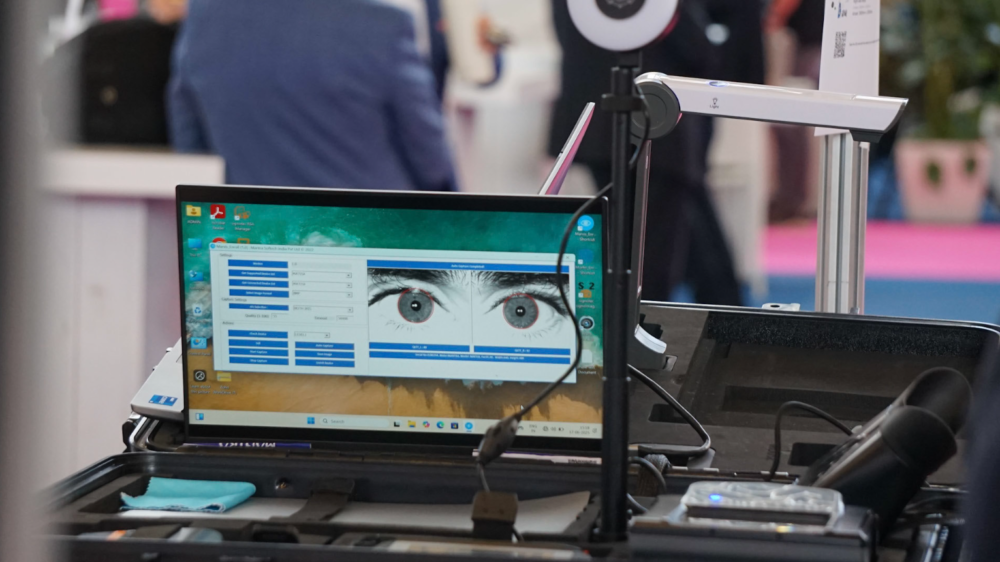
Walking through the exhibition floor, it became clear that the market is not lacking technology. Solutions ranged from digital wallets and electronic identification platforms to biometric verification, electronic signatures, fraud prevention tools, and identity management systems. Nearly every problem already has multiple solutions.
The greater challenge lies in connecting these technologies into a seamless service experience.
Different standards, disconnected systems, and inconsistent processes have become major barriers to effective digitalisation. Fragmentation often results in higher costs, longer processes, and poorer user experiences.
As Rokas Jašinskas points out, the market offers plenty of individual components and technologies, but far less attention is given to connecting them into a unified customer journey.

What Did Identity Week Europe 2026 Confirm?
If the event’s main message could be summarised in a single sentence, it would be this:
Europe does not lack digital identity technologies. The challenge now is bringing them together into a seamless user experience.
The biggest obstacles today are user trust, organisational readiness, interoperability between systems, and the ability to deliver smooth and consistent experiences.
For the Elpako team, the event reinforced a belief we have held for some time: future competitive advantage will belong not to those who create yet another technology component, but to those who can combine multiple technologies into invisible infrastructure that enables people to access services faster, more simply, and more securely.
This is the direction increasingly visible across Europe today—and it may become the defining factor in the next stage of digital identity evolution.